Arrival of the Dutch in Kerala
Audio Guide
Listen to artifact story
Audio guide ready
Arrival of the Dutch in Kerala
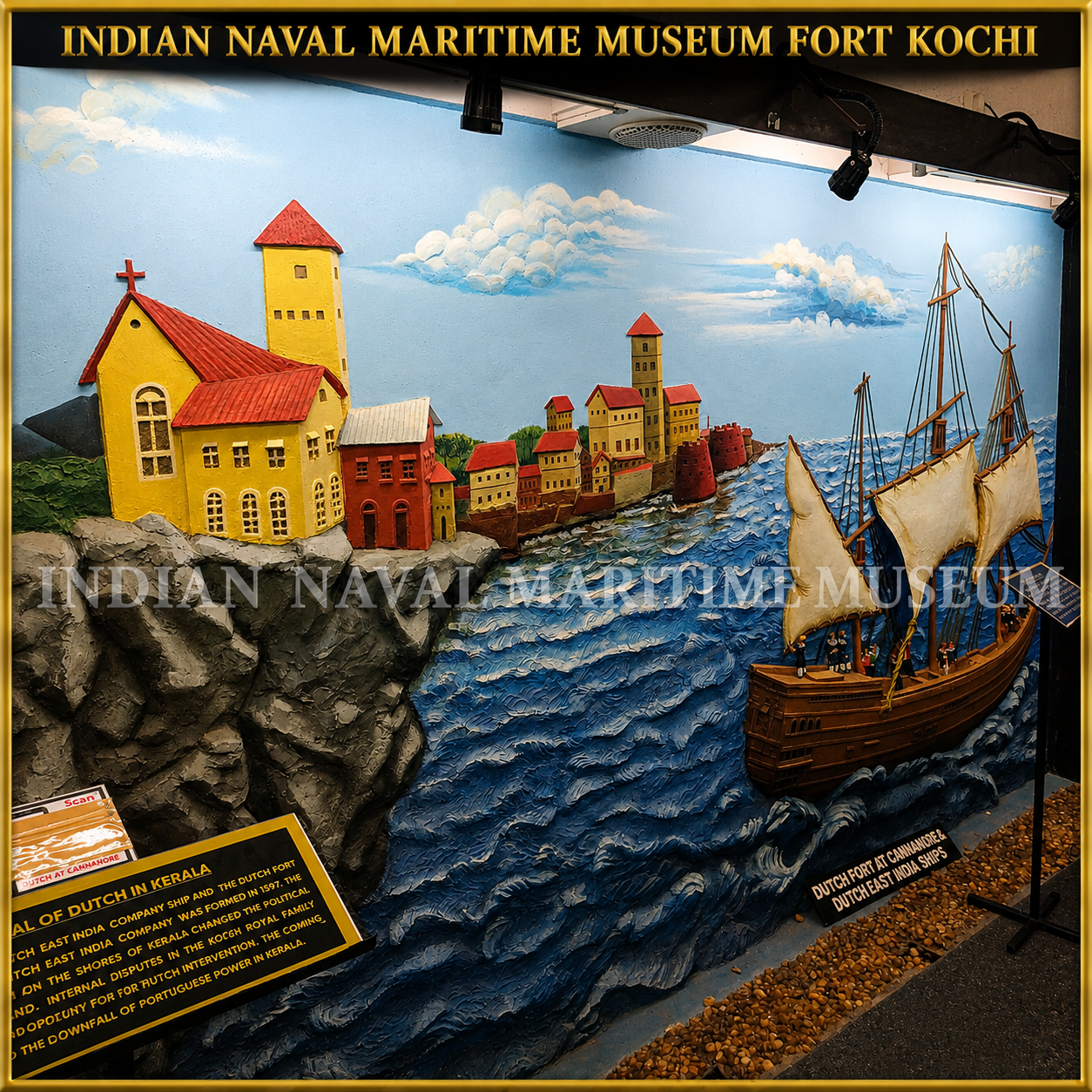
This exhibit illustrates the arrival of the Dutch East India Company on the Malabar Coast and its significant influence on Kerala’s political and maritime history. The relief depicts a Dutch trading vessel and the Dutch fort at Cannanore (present-day Kannur), symbolizing the establishment of Dutch commercial and military presence in the region.
The Dutch arrived in Kerala during the early seventeenth century as part of their efforts to control the lucrative spice trade. Through the Dutch East India Company (VOC), they sought to challenge Portuguese dominance and establish trading networks across the Indian Ocean. Their arrival marked a major shift in the balance of power among European colonial powers in Kerala.
Internal conflicts within the Kingdom of Kochi and other regional political rivalries created opportunities for Dutch intervention. By forming alliances with local rulers and expanding their influence along the coast, the Dutch gradually weakened Portuguese authority. Their military and commercial successes eventually contributed to the decline of Portuguese power in Kerala.
The exhibit highlights an important chapter in Kerala’s maritime heritage, demonstrating how European trade, naval power, and regional politics shaped the history of the Malabar Coast.
Key Highlights
Depicts a Dutch East India Company ship and the Dutch fort at Cannanore.
Represents the arrival of Dutch traders and naval forces in Kerala.
Illustrates the Dutch challenge to Portuguese dominance in the spice trade.
Highlights the role of local political conflicts in facilitating Dutch expansion.
Showcases the impact of European maritime powers on Kerala’s history.
Reflects the transformation of trade and political relations along the Malabar Coast.
This exhibit illustrates the arrival of the Dutch East India Company on the Malabar Coast and its significant influence on Kerala’s political and maritime history. The relief depicts a Dutch trading vessel and the Dutch fort at Cannanore (present-day Kannur), symbolizing the establishment of Dutch commercial and military presence in the region.
The Dutch arrived in Kerala during the early seventeenth century as part of their efforts to control the lucrative spice trade. Through the Dutch East India Company (VOC), they sought to challenge Portuguese dominance and establish trading networks across the Indian Ocean. Their arrival marked a major shift in the balance of power among European colonial powers in Kerala.
Internal conflicts within the Kingdom of Kochi and other regional political rivalries created opportunities for Dutch intervention. By forming alliances with local rulers and expanding their influence along the coast, the Dutch gradually weakened Portuguese authority. Their military and commercial successes eventually contributed to the decline of Portuguese power in Kerala.
The exhibit highlights an important chapter in Kerala’s maritime heritage, demonstrating how European trade, naval power, and regional politics shaped the history of the Malabar Coast.
Key Highlights
Depicts a Dutch East India Company ship and the Dutch fort at Cannanore.
Represents the arrival of Dutch traders and naval forces in Kerala.
Illustrates the Dutch challenge to Portuguese dominance in the spice trade.
Highlights the role of local political conflicts in facilitating Dutch expansion.
Showcases the impact of European maritime powers on Kerala’s history.
Reflects the transformation of trade and political relations along the Malabar Coast.