Arrival of Vasco da Gama
Audio Guide
Listen to artifact story
Audio guide ready
Arrival of Vasco da Gama
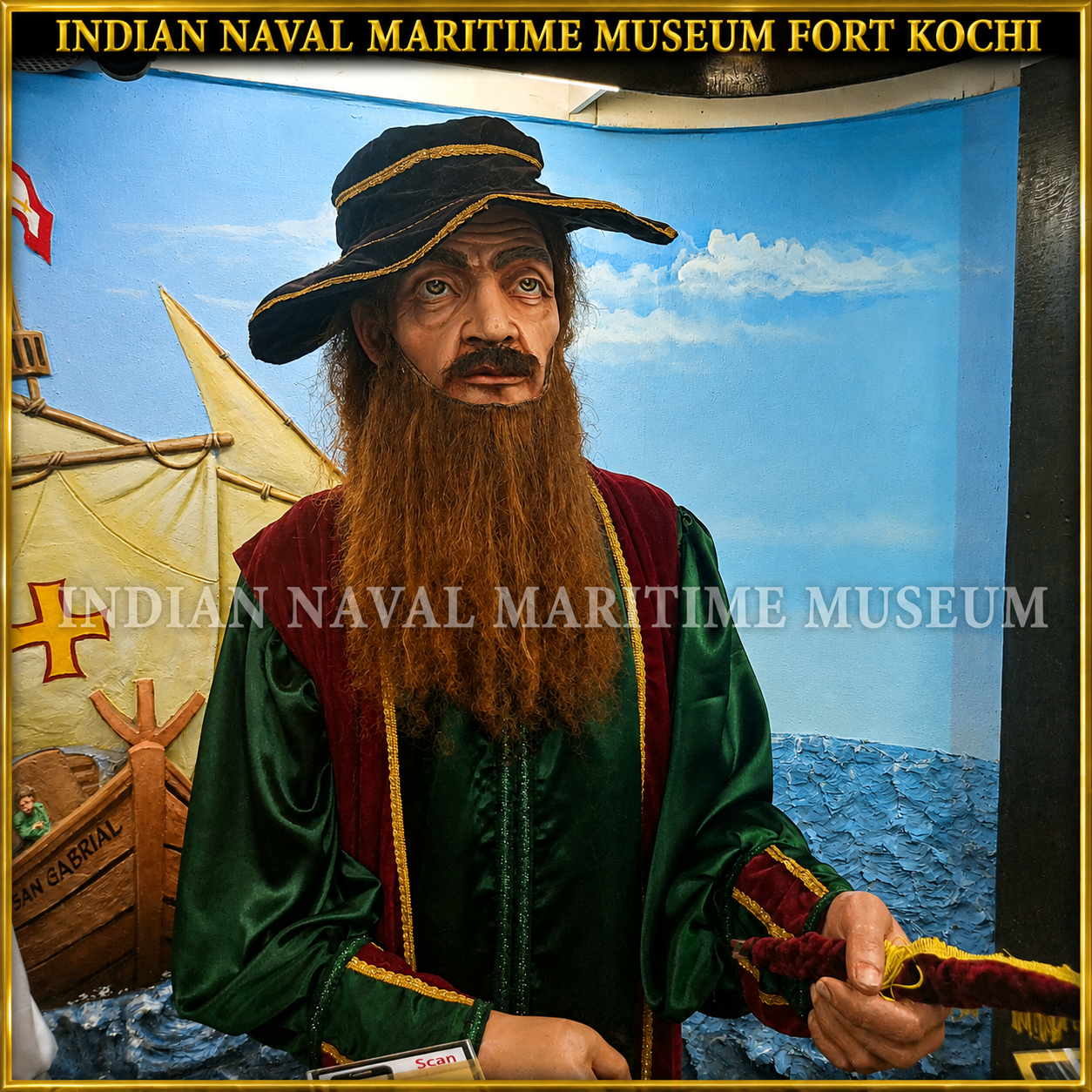
This exhibit commemorates one of the most significant events in maritime history—the arrival of the Portuguese explorer Vasco da Gama on the shores of Calicut (Kozhikode) in 1498. His successful voyage established the first direct sea route between Europe and India, transforming global trade and opening a new chapter in world history.
The relief depicts Vasco da Gama alongside a Gujarati pilot who assisted him during the final stage of his journey across the Arabian Sea. After sailing around the Cape of Good Hope at the southern tip of Africa, da Gama reached the East African port of Malindi, where he obtained the services of an experienced navigator to guide his fleet to India.
Travelling aboard his flagship São Gabriel, accompanied by a squadron of ships, Vasco da Gama arrived at Calicut on 20 May 1498 (historically recognized date). His arrival marked the beginning of direct maritime trade between Europe and India and paved the way for the establishment of Portuguese influence in the Indian Ocean region.
The event had far-reaching consequences for global commerce, navigation, and colonial expansion. It connected Europe directly with the rich spice markets of India and altered the balance of power in international trade for centuries.
Key Highlights
Depicts Vasco da Gama’s historic voyage to India.
Shows the Gujarati pilot who guided the fleet from Malindi to Calicut.
Represents the arrival of the Portuguese at Calicut in 1498.
Highlights the role of the flagship São Gabriel in the expedition.
Marks the opening of the direct sea route between Europe and India.
Illustrates a turning point in maritime exploration and global trade history.
Symbolizes the beginning of European maritime influence in the Indian Ocean.
This exhibit commemorates one of the most significant events in maritime history—the arrival of the Portuguese explorer Vasco da Gama on the shores of Calicut (Kozhikode) in 1498. His successful voyage established the first direct sea route between Europe and India, transforming global trade and opening a new chapter in world history.
The relief depicts Vasco da Gama alongside a Gujarati pilot who assisted him during the final stage of his journey across the Arabian Sea. After sailing around the Cape of Good Hope at the southern tip of Africa, da Gama reached the East African port of Malindi, where he obtained the services of an experienced navigator to guide his fleet to India.
Travelling aboard his flagship São Gabriel, accompanied by a squadron of ships, Vasco da Gama arrived at Calicut on 20 May 1498 (historically recognized date). His arrival marked the beginning of direct maritime trade between Europe and India and paved the way for the establishment of Portuguese influence in the Indian Ocean region.
The event had far-reaching consequences for global commerce, navigation, and colonial expansion. It connected Europe directly with the rich spice markets of India and altered the balance of power in international trade for centuries.
Key Highlights
Depicts Vasco da Gama’s historic voyage to India.
Shows the Gujarati pilot who guided the fleet from Malindi to Calicut.
Represents the arrival of the Portuguese at Calicut in 1498.
Highlights the role of the flagship São Gabriel in the expedition.
Marks the opening of the direct sea route between Europe and India.
Illustrates a turning point in maritime exploration and global trade history.
Symbolizes the beginning of European maritime influence in the Indian Ocean.