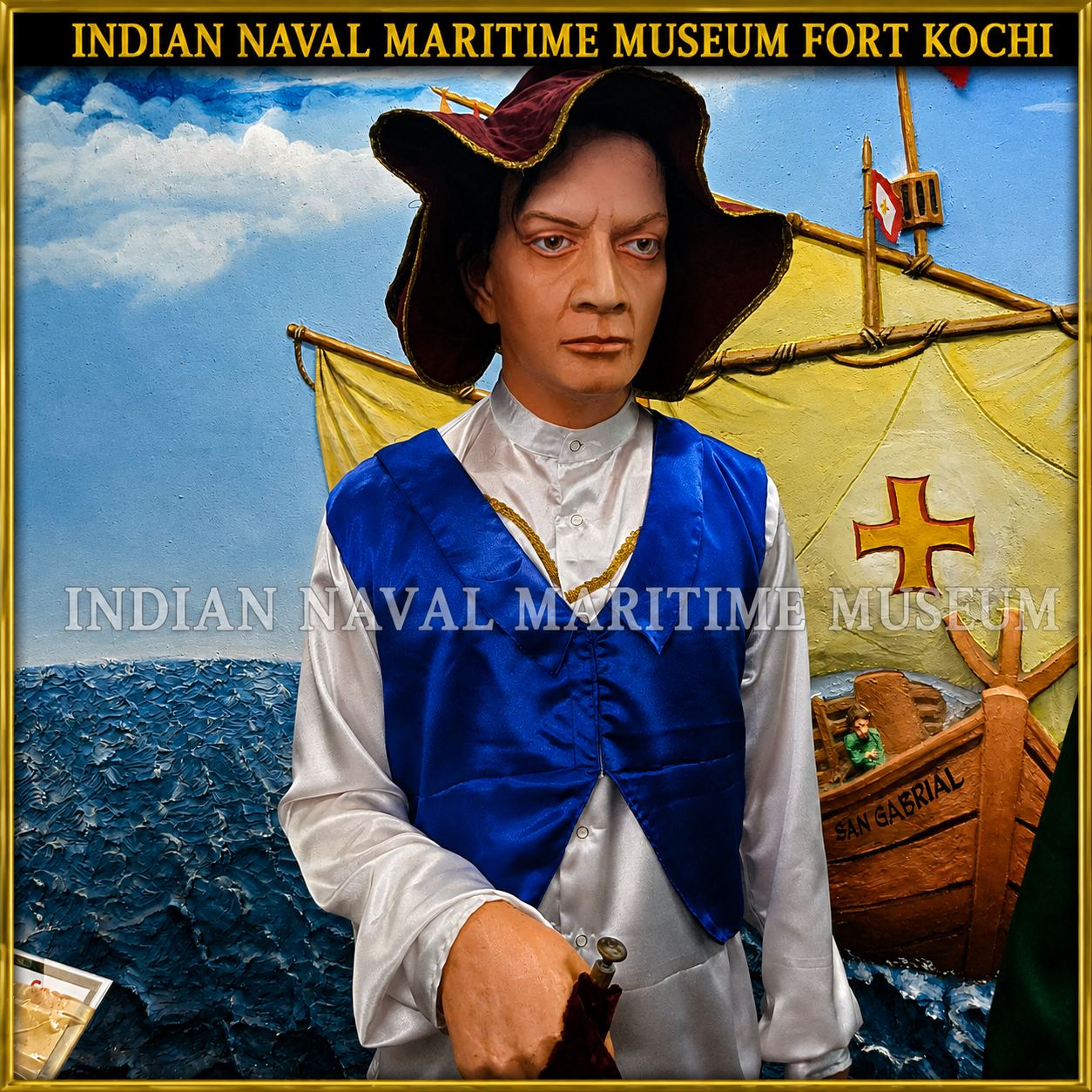
Gujarati Pilot (Kanji Malam)
Audio Guide
Listen to artifact story
Audio guide ready
Gujarati Pilot (Kanji Malam)
This exhibit highlights the important contribution of the Gujarati navigator Kanji Malam, the experienced sailor believed to have guided Vasco da Gama across the Indian Ocean to Calicut (Kozhikode) in 1498. His maritime knowledge played a crucial role in one of the most significant voyages in world history.
Kanji Malam was a trader and navigator from Mandvi in Kutch, Gujarat, a region renowned for its shipbuilding and seafaring traditions. As a merchant engaged in trade between India and the East African coast, he possessed extensive knowledge of monsoon winds, sea routes, navigation techniques, and the ports of the Indian Ocean.
According to historical accounts, Vasco da Gama encountered Kanji Malam at Malindi, on the East African coast. Recognizing his expertise, the Portuguese explorer enlisted his services to guide the fleet safely across the Arabian Sea to Calicut. Using his understanding of seasonal winds and established trade routes, Kanji Malam helped complete the final and most critical stage of the voyage.
The arrival of Vasco da Gama in Calicut opened a direct maritime link between Europe and India, transforming global trade. This exhibit acknowledges the often-overlooked role of indigenous Indian navigators whose skills and experience made such historic voyages possible.
Key Highlights
Honors Kanji Malam, the Gujarati sailor associated with Vasco da Gama’s voyage.
Represents the maritime expertise of Indian navigators during the Age of Exploration.
Highlights the importance of Mandvi, Gujarat, as a historic shipbuilding and trading center.
Illustrates the role of Indian Ocean trade networks connecting India and East Africa.
Demonstrates the significance of local navigational knowledge in long-distance sea voyages.
Recognizes the contribution of Indian seafarers to global maritime history.
Symbolizes the collaboration between European explorers and experienced Asian navigators.
This exhibit highlights the important contribution of the Gujarati navigator Kanji Malam, the experienced sailor believed to have guided Vasco da Gama across the Indian Ocean to Calicut (Kozhikode) in 1498. His maritime knowledge played a crucial role in one of the most significant voyages in world history.
Kanji Malam was a trader and navigator from Mandvi in Kutch, Gujarat, a region renowned for its shipbuilding and seafaring traditions. As a merchant engaged in trade between India and the East African coast, he possessed extensive knowledge of monsoon winds, sea routes, navigation techniques, and the ports of the Indian Ocean.
According to historical accounts, Vasco da Gama encountered Kanji Malam at Malindi, on the East African coast. Recognizing his expertise, the Portuguese explorer enlisted his services to guide the fleet safely across the Arabian Sea to Calicut. Using his understanding of seasonal winds and established trade routes, Kanji Malam helped complete the final and most critical stage of the voyage.
The arrival of Vasco da Gama in Calicut opened a direct maritime link between Europe and India, transforming global trade. This exhibit acknowledges the often-overlooked role of indigenous Indian navigators whose skills and experience made such historic voyages possible.
Key Highlights
Honors Kanji Malam, the Gujarati sailor associated with Vasco da Gama’s voyage.
Represents the maritime expertise of Indian navigators during the Age of Exploration.
Highlights the importance of Mandvi, Gujarat, as a historic shipbuilding and trading center.
Illustrates the role of Indian Ocean trade networks connecting India and East Africa.
Demonstrates the significance of local navigational knowledge in long-distance sea voyages.
Recognizes the contribution of Indian seafarers to global maritime history.
Symbolizes the collaboration between European explorers and experienced Asian navigators.