Spice Trade
Audio Guide
Listen to artifact story
Audio guide ready
This exhibit highlights the historic spice trade that made Kerala one of the most sought-after regions in the world. For centuries, Kerala was renowned as the “Land of Spices,” producing valuable commodities such as black pepper, cardamom, cinnamon, ginger, and other aromatic products that were in high demand across Asia, the Middle East, and Europe.
Black pepper, often referred to as “Black Gold,” was the most important export and earned Kerala a prominent place on ancient maritime trade routes. Merchants from Arabia, China, and later Europe travelled great distances to reach the ports of the Malabar Coast in search of these prized spices.
The immense wealth generated by the spice trade attracted European powers, including the Portuguese, Dutch, and British. Their desire to control the lucrative spice market significantly influenced the political, economic, and social history of Kerala and eventually shaped the course of Indian history.
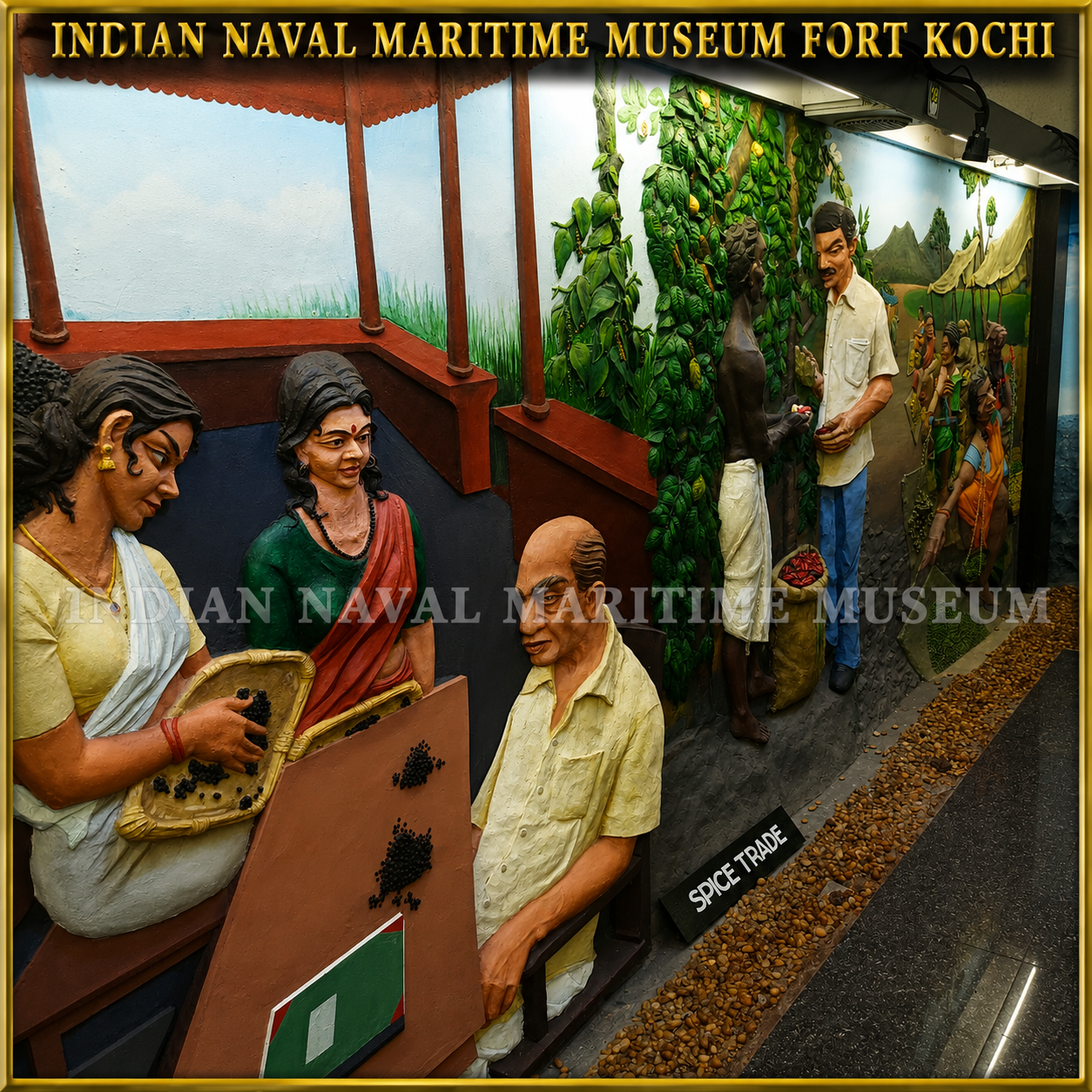
The relief depicted in this exhibit portrays a traditional spice market and pepper granary, illustrating the collection, storage, and trading of spices that formed the backbone of Kerala’s maritime economy. It serves as a reminder of the region’s central role in global commerce and cultural exchange.
Key Highlights
Showcases Kerala’s historic role as a global center of the spice trade.
Highlights the importance of black pepper, known as “Black Gold.”
Explains how the spice trade attracted traders from Arabia, China, and Europe.
Demonstrates the economic significance of spice markets and storage facilities.
Illustrates the influence of the spice trade on Kerala’s maritime history.
Reflects the impact of European competition for control of the spice routes.
Celebrates Kerala’s enduring legacy as the world-famous “Land of Spices.”
Black pepper, often referred to as “Black Gold,” was the most important export and earned Kerala a prominent place on ancient maritime trade routes. Merchants from Arabia, China, and later Europe travelled great distances to reach the ports of the Malabar Coast in search of these prized spices.
The immense wealth generated by the spice trade attracted European powers, including the Portuguese, Dutch, and British. Their desire to control the lucrative spice market significantly influenced the political, economic, and social history of Kerala and eventually shaped the course of Indian history.
The relief depicted in this exhibit portrays a traditional spice market and pepper granary, illustrating the collection, storage, and trading of spices that formed the backbone of Kerala’s maritime economy. It serves as a reminder of the region’s central role in global commerce and cultural exchange.
Key Highlights
Showcases Kerala’s historic role as a global center of the spice trade.
Highlights the importance of black pepper, known as “Black Gold.”
Explains how the spice trade attracted traders from Arabia, China, and Europe.
Demonstrates the economic significance of spice markets and storage facilities.
Illustrates the influence of the spice trade on Kerala’s maritime history.
Reflects the impact of European competition for control of the spice routes.
Celebrates Kerala’s enduring legacy as the world-famous “Land of Spices.”