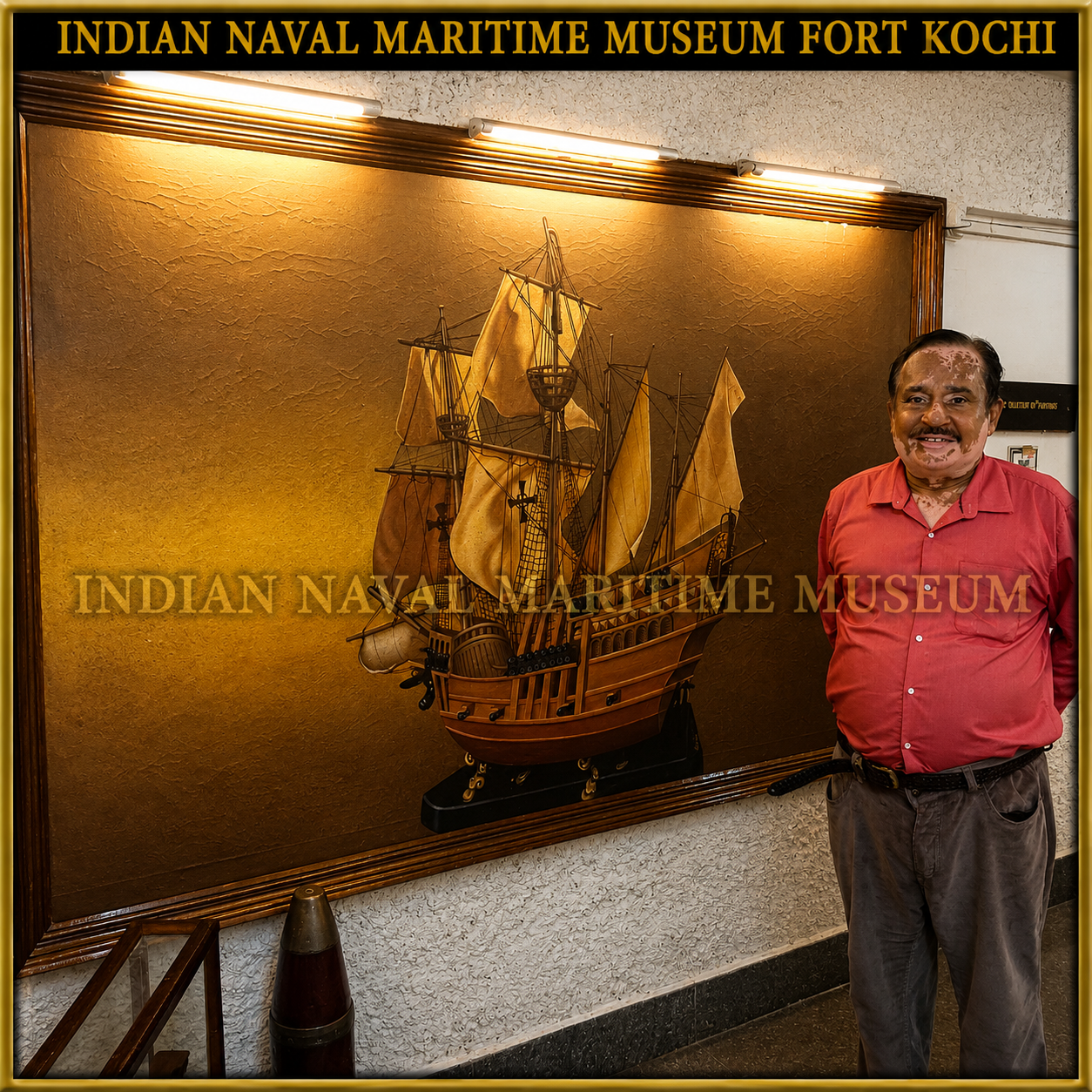
São Gabriel – Vasco da Gama’s Flagship
Audio Guide
Listen to artifact story
Audio guide ready
São Gabriel – Vasco da Gama’s Flagship
São Gabriel was the flagship of the Portuguese explorer Vasco da Gama during his historic voyage that established the first direct sea route between Europe and India. This three-masted ocean-going vessel played a pivotal role in one of the most significant maritime expeditions in world history.
Technical Characteristics
Type: Ocean-going sailing vessel (Carrack / Nau)
Tonnage: Approximately 120 tons
Masts: Three
Country: Portugal
Commander: Vasco da Gama
Historic Voyage
The São Gabriel departed from Lisbon, Portugal, on 8 July 1497 as part of Vasco da Gama’s expedition to find a direct maritime route to India. Sailing around the southern tip of Africa, the fleet crossed the Indian Ocean and reached the Malabar Coast of India.
On 20 May 1498 (historically accepted date), Vasco da Gama arrived at Calicut (present-day Kozhikode, Kerala), opening a direct sea link between Europe and India for the first time.
Importance in Maritime History
The voyage of São Gabriel:
Established direct maritime trade between Europe and India.
Marked the beginning of European dominance in Indian Ocean trade.
Opened new global trade networks linking Europe, Africa, and Asia.
Significantly influenced the political, economic, and cultural history of India and the world.
Legacy
The São Gabriel remains one of the most famous ships in maritime history. Its successful voyage transformed global commerce, accelerated the Age of Exploration, and ushered in a new era of international maritime trade. The ship symbolizes the beginning of sustained European contact with India through the sea route around Africa.
This exhibit highlights the vessel that carried Vasco da Gama on his groundbreaking expedition and changed the course of world history through maritime exploration.
São Gabriel was the flagship of the Portuguese explorer Vasco da Gama during his historic voyage that established the first direct sea route between Europe and India. This three-masted ocean-going vessel played a pivotal role in one of the most significant maritime expeditions in world history.
Technical Characteristics
Type: Ocean-going sailing vessel (Carrack / Nau)
Tonnage: Approximately 120 tons
Masts: Three
Country: Portugal
Commander: Vasco da Gama
Historic Voyage
The São Gabriel departed from Lisbon, Portugal, on 8 July 1497 as part of Vasco da Gama’s expedition to find a direct maritime route to India. Sailing around the southern tip of Africa, the fleet crossed the Indian Ocean and reached the Malabar Coast of India.
On 20 May 1498 (historically accepted date), Vasco da Gama arrived at Calicut (present-day Kozhikode, Kerala), opening a direct sea link between Europe and India for the first time.
Importance in Maritime History
The voyage of São Gabriel:
Established direct maritime trade between Europe and India.
Marked the beginning of European dominance in Indian Ocean trade.
Opened new global trade networks linking Europe, Africa, and Asia.
Significantly influenced the political, economic, and cultural history of India and the world.
Legacy
The São Gabriel remains one of the most famous ships in maritime history. Its successful voyage transformed global commerce, accelerated the Age of Exploration, and ushered in a new era of international maritime trade. The ship symbolizes the beginning of sustained European contact with India through the sea route around Africa.
This exhibit highlights the vessel that carried Vasco da Gama on his groundbreaking expedition and changed the course of world history through maritime exploration.